TerraMow S800 or S1200: Which one is really worth it – and for whom is the extra cost sensible?
TerraMow is one of the brands that quickly gained attention in the wireless robotic mower world. The reason is simple: The S-series does not rely on boundary wires or classic RTK antennas, but on an AI vision concept with automatic mapping, obstacle detection, and a comparatively straightforward setup. This sounds very attractive to many buyers. No wire, no RTK mast, no complicated initial installation – instead, a modern robotic mower that visually understands the garden.
Things get particularly interesting when you have to choose between the TerraMow S800 and the S1200. On paper, both models look very similar. Both work with TerraVision, both are designed for more complex gardens, both promise quick setup, narrow passages from 60 cm, and slopes up to 36%. For this reason, the purchasing decision is not as trivial as it may seem at first glance. The difference lies not only in 800 or 1200 m² but also in the question of how much reserve, how much map data, and how much future security you really need.
This article is therefore not just a mere repetition of data sheets. It is about the actual purchasing decision: Where are the S800 and S1200 strong, where should one remain sober due to the relatively young platform, what real limits are shown in user feedback, and when does the extra cost for the S1200 actually make sense?
What S800 and S1200 have in common
Both models are based on the same fundamental idea. TerraMow relies on a vision-based system for the S-series instead of wires or classic RTK navigation. According to the manufacturer, TerraVision combines high-resolution cameras, AI-supported mapping, 3D obstacle detection, and visual positioning in one system. In practice, this means: The robot is supposed to visually capture the lawn area, recognize boundaries, navigate around obstacles, and also find its way in more complex garden layouts.
S800 and S1200 also share the same core values in hardware: 203 mm cutting width, 25 to 75 mm cutting height, slope capability up to 20 degrees or 36%, OTA updates, app control, spot mowing, multi-zone logic, and passage widths from 60 cm. Both models are therefore not aimed at buyers looking for just a simple lawn cutter, but at people who want a more modern, wireless AI mower.
This is where an important truth lies: Those who are wavering between the S800 and S1200 are not deciding between “simple” and “premium,” but between two closely related models of the same platform. This automatically means: The real differences lie less in the basic concept than in the area reserve and in the question of how well the device should handle larger or data-intensive gardens.
The most important difference: 800 m² versus 1200 m² is more than just a number
Officially, the TerraMow S800 is designed for lawn areas up to 800 m², while the S1200 is for up to 1200 m². This is the visible main difference. Less visible, but more important for the purchasing decision, is the manufacturer’s statement from the FAQs and product pages: The S1200 works with a stronger chip and more memory to process more map data and more complex mowing tasks. This is a point that many overlook in the first comparison.
For this reason, one should not only compare the models by square meterage. If your garden is 700 or 750 m² but has many sub-areas, winding transitions, islands, beds, visual interruptions, and narrow passages, then the S1200 is not automatically excessive. It can be the more sensible choice precisely because of the larger map and processing reserve. Conversely, if your garden is relatively clearly structured and the actual mowing area is more like 500 to 650 m², the S1200 does not automatically provide a huge practical advantage.
This is the core of the decision. The S800 is not simply the “little brother,” and the S1200 is not just the “better version.” In many gardens, the S800 works perfectly well. The S1200 becomes sensible mainly when you either want to handle more area or more complexity effectively.
Where the TerraMow S800 is strong
The TerraMow S800 is particularly interesting if you have a small to medium-sized garden and consciously want to rely on a wireless AI model. It is attractive in this class. It promises the comfort of wireless setup while remaining significantly cheaper than many larger premium alternatives.
Its strength lies in gardens that are not too large but can certainly be demanding. TerraMow itself advertises that the S-series can handle narrow passages from 60 cm, recognizes obstacles up to 37 cm high, and is supposed to work well in complex gardens. User comments present a mixed but quite interesting picture: There are positive impressions that the system is surprisingly easy to set up and works very well in suitable areas. This makes the S800 exciting for buyers who do not want to see any wires but also do not want to switch immediately to the most expensive class.
The S800 is therefore not just an entry-level solution, but it is often the more rational choice when the area clearly remains below 800 m² and the garden does not constantly push the limits of the system.
Where the TerraMow S1200 is more sensible
The S1200 becomes interesting when you want more reserve. This applies not only to larger gardens up to 1200 m² but also to other situations. The stronger hardware and larger memory are especially plausible where a lot of map data accumulates. So, where the garden is not just larger but more complex.
If you have multiple sub-areas, if transitions and no-go zones need to be accurately mapped, or if you know from the outset that your garden is not a simple standard area, the S1200 often seems like the more reasonable investment. Not because the S800 is “too weak,” but because the S1200 offers more buffer. In a vision-based mower, this is not unimportant. The more the system has to visually understand and map, the more the underlying platform plays a role.
Buyers who are close to the 800 m² limit should not calculate too narrowly here. Those who read 780 m² and immediately think “so the S800 is enough” often overlook that marketing limits apply under ideal conditions. In practice, reserve is almost never a mistake.
What makes TerraMow really strong
One must fairly concede to TerraMow that the basic idea of the S-series is attractive. No wires, no RTK, yet automatic mapping and AI obstacle detection – this is a strong selling point. Especially compared to classic wired robots, the setup is significantly more pleasant. The manufacturer speaks of commissioning in just a few minutes, and this point repeatedly appears positively in user feedback: TerraMow often seems easier to set up than many wired systems.
The flexibility in the mowing concept is also strong. Standard mode, spot mode, and multi-base logic are not just marketing terms but are actually practical for some gardens. For example, if someone wants to specifically rework individual sub-areas or maintain several structured zones, they get more logic here than with simple random robots.
The topic of app control is also fundamentally a plus point. In newer user opinions, the TerraMow app is even explicitly praised, especially compared to some other newer brands. This does not mean that the system is already completely flawless. But it shows that TerraMow is not only living off the concept but is genuinely on a good path in some respects.
Where one should be cautious despite the strong idea
This is where the article becomes important. Because while TerraMow is exciting, one should not act as if there is already an extremely broad, long-established user base like with old Husqvarna, Gardena, or Worx models for the S800 and S1200 models. The actual data situation is still significantly smaller. This does not mean that the devices are bad. It just means that one should be more cautious with superlatives.
In Reddit threads and initial community impressions, a few recurring points emerge. These include mapping issues at the edges, slight inaccuracies at boundaries, not yet fully mature app functions in older software versions, and the general question of how stable a purely visual system really remains in visually challenging gardens over time. An early comparison with Mammotion praises the basic idea but also notes that the app was still quite basic at that time and some functions were missing. Newer voices sound more positive, indicating that TerraMow has improved through software updates. However, this is also the honest assessment: The platform seems to be in flux, not completely “finalized.”
Additionally, there is a known limitation of such vision systems: edges, bushes, fences, and visually difficult transitions remain more challenging than on ideal demo areas. One user describes after prolonged use that taller grass tends to remain at edges and fences, especially when grass and adjacent vegetation visually blend together. This is not a damning judgment but a real practical point.
S800 or S1200: Which one fits better with your garden type?
Clear case for the S800
The S800 is the more sensible choice if your garden is realistically in the range of up to 600 or 700 m² and the area is not perfectly rectangular but also not excessively chaotic. If you are mainly looking for a wireless mower with a modern concept and do not want to spend unnecessarily more, the S800 is often the more reasonable model. It already covers the typical private garden in this size well.
Clear case for the S1200
The S1200 is the better choice if you either have significantly more area or if your garden, while not huge, is very data-intensive. More sub-areas, more no-go zones, more structure, more complexity – this is where the extra cost is easier to justify. That TerraMow itself refers to a stronger chip and more memory is not an unimportant side note here but a real purchasing hint.
The borderline case
If you are in the range of 700 to 850 m², you should not only buy based on area. The actual lever is complexity. A quiet garden with a main area can be perfectly fine with the S800. A similarly sized but heavily fragmented garden is often more S1200 territory.
How does it perform with edges, obstacles, and complex gardens?
TerraMow actively promotes the S-series with edge-to-edge cutting, 3D obstacle avoidance, and complex garden layouts. This sounds strong – and in part, it is. Especially the basic idea of working without wires and without RTK through visual capture is quite exciting for winding gardens. But here too, marketing and reality are not the same.
In practice, one should not overstate edge performance. Especially with bushes, fences, beds, or visually unclear transitions, early user reports show that not everything always stays perfectly short there. This is not an unusual problem for AI vision mowers. If the contrast between the lawn and the surroundings is not clear enough or grass grows taller in problem areas, things become more difficult.
The picture looks somewhat better with obstacles. The visual system seems fundamentally plausible and can be a real advantage in normal everyday gardens. Nevertheless, one should not expect magic here either. Small, very flat, or visually unfavorable objects remain the more dangerous category for almost all robots.
Wear parts and sensible accessories
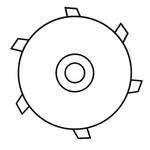
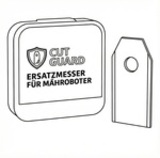
Anyone deciding on a TerraMow S800 or S1200 should not only look at the basic machine but also at the typical wear parts. Especially with robotic mowers, the condition of the cutting disc and blades in everyday use matters more than many expect. When the mowing result declines or blade changes are due, a suitable cutting disc for TerraMow S800, S1200, and V1000 is a sensible topic – especially if you are looking for a compatible set with protection and additional blades.
Especially with a model that operates regularly and relatively quietly, wear is often underestimated. A fresh cutting disc is not marketing accessories but a very practical part of long-term maintenance.
Is TerraMow worth it right now?
Yes – but with a clear expectation. TerraMow is interesting because the brand brings an exciting AI vision concept into a price range where many buyers do not want to immediately reach for the most expensive high-end devices. This makes the S800 and S1200 relevant. The idea is modern, the platform seems ambitious, and the first real user opinions show that the devices are by no means just nicely marketed.
At the same time, one should not write as if there is already the same maturity as with long-established classics. The actual user base is smaller, some impressions are still software-dependent, and one should remain sober regarding edge performance or complex visual transitions. Those who buy TerraMow are currently purchasing more of an exciting modern platform with potential than an optimized mainstream system developed over decades.
Conclusion: S800 or S1200?
The TerraMow S800 is the more sensible choice for smaller to medium gardens if you want to use the modern TerraVision concept as economically as possible. It is strong when the area is not too large and not unnecessarily complicated. The S1200 is especially worthwhile if you need more reserve – either due to actual area size or because of a garden that brings more map data, more zones, and more complexity.
For this reason, the decision should not only depend on square meterage. Those who calculate narrowly may end up buying too small. Those who realistically consider complexity usually make the better choice. And this is where the S1200 is the more rounded model for many more ambitious gardens.
Ultimately, the S800 is the better price-performance purchase for the typical wireless private garden. The S1200 is the better choice if you want more reserve, more map buffer, and more peace of mind for a more complex garden.
Short purchase recommendation in one sentence
Choose the TerraMow S800 for clearly structured gardens up to about 700 m² – and take the S1200 as soon as area, zones, or complexity become so large that you prefer reserve over boundary operation.




TerraMow S800 or S1200: Which one is really worth it – and for whom is the extra cost sensible?
TerraMow S800 or S1200: Which one is really worth it – and for whom is the extra cost sensible?
TerraMow is one of the brands that quickly gained attention in the wireless robotic mower world. The reason is simple: The S-series does not rely on boundary wires or classic RTK antennas, but on an AI vision concept with automatic mapping, obstacle detection, and a comparatively straightforward setup. This sounds very attractive to many buyers. No wire, no RTK mast, no complicated initial installation – instead, a modern robotic mower that visually understands the garden.
Things get particularly interesting when you have to choose between the TerraMow S800 and the S1200. On paper, both models look very similar. Both work with TerraVision, both are designed for more complex gardens, both promise quick setup, narrow passages from 60 cm, and slopes up to 36%. For this reason, the purchasing decision is not as trivial as it may seem at first glance. The difference lies not only in 800 or 1200 m² but also in the question of how much reserve, how much map data, and how much future security you really need.
This article is therefore not just a mere repetition of data sheets. It is about the actual purchasing decision: Where are the S800 and S1200 strong, where should one remain sober due to the relatively young platform, what real limits are shown in user feedback, and when does the extra cost for the S1200 actually make sense?
What S800 and S1200 have in common
Both models are based on the same fundamental idea. TerraMow relies on a vision-based system for the S-series instead of wires or classic RTK navigation. According to the manufacturer, TerraVision combines high-resolution cameras, AI-supported mapping, 3D obstacle detection, and visual positioning in one system. In practice, this means: The robot is supposed to visually capture the lawn area, recognize boundaries, navigate around obstacles, and also find its way in more complex garden layouts.
S800 and S1200 also share the same core values in hardware: 203 mm cutting width, 25 to 75 mm cutting height, slope capability up to 20 degrees or 36%, OTA updates, app control, spot mowing, multi-zone logic, and passage widths from 60 cm. Both models are therefore not aimed at buyers looking for just a simple lawn cutter, but at people who want a more modern, wireless AI mower.
This is where an important truth lies: Those who are wavering between the S800 and S1200 are not deciding between “simple” and “premium,” but between two closely related models of the same platform. This automatically means: The real differences lie less in the basic concept than in the area reserve and in the question of how well the device should handle larger or data-intensive gardens.
The most important difference: 800 m² versus 1200 m² is more than just a number
Officially, the TerraMow S800 is designed for lawn areas up to 800 m², while the S1200 is for up to 1200 m². This is the visible main difference. Less visible, but more important for the purchasing decision, is the manufacturer’s statement from the FAQs and product pages: The S1200 works with a stronger chip and more memory to process more map data and more complex mowing tasks. This is a point that many overlook in the first comparison.
For this reason, one should not only compare the models by square meterage. If your garden is 700 or 750 m² but has many sub-areas, winding transitions, islands, beds, visual interruptions, and narrow passages, then the S1200 is not automatically excessive. It can be the more sensible choice precisely because of the larger map and processing reserve. Conversely, if your garden is relatively clearly structured and the actual mowing area is more like 500 to 650 m², the S1200 does not automatically provide a huge practical advantage.
This is the core of the decision. The S800 is not simply the “little brother,” and the S1200 is not just the “better version.” In many gardens, the S800 works perfectly well. The S1200 becomes sensible mainly when you either want to handle more area or more complexity effectively.
Where the TerraMow S800 is strong
The TerraMow S800 is particularly interesting if you have a small to medium-sized garden and consciously want to rely on a wireless AI model. It is attractive in this class. It promises the comfort of wireless setup while remaining significantly cheaper than many larger premium alternatives.
Its strength lies in gardens that are not too large but can certainly be demanding. TerraMow itself advertises that the S-series can handle narrow passages from 60 cm, recognizes obstacles up to 37 cm high, and is supposed to work well in complex gardens. User comments present a mixed but quite interesting picture: There are positive impressions that the system is surprisingly easy to set up and works very well in suitable areas. This makes the S800 exciting for buyers who do not want to see any wires but also do not want to switch immediately to the most expensive class.
The S800 is therefore not just an entry-level solution, but it is often the more rational choice when the area clearly remains below 800 m² and the garden does not constantly push the limits of the system.
Where the TerraMow S1200 is more sensible
The S1200 becomes interesting when you want more reserve. This applies not only to larger gardens up to 1200 m² but also to other situations. The stronger hardware and larger memory are especially plausible where a lot of map data accumulates. So, where the garden is not just larger but more complex.
If you have multiple sub-areas, if transitions and no-go zones need to be accurately mapped, or if you know from the outset that your garden is not a simple standard area, the S1200 often seems like the more reasonable investment. Not because the S800 is “too weak,” but because the S1200 offers more buffer. In a vision-based mower, this is not unimportant. The more the system has to visually understand and map, the more the underlying platform plays a role.
Buyers who are close to the 800 m² limit should not calculate too narrowly here. Those who read 780 m² and immediately think “so the S800 is enough” often overlook that marketing limits apply under ideal conditions. In practice, reserve is almost never a mistake.
What makes TerraMow really strong
One must fairly concede to TerraMow that the basic idea of the S-series is attractive. No wires, no RTK, yet automatic mapping and AI obstacle detection – this is a strong selling point. Especially compared to classic wired robots, the setup is significantly more pleasant. The manufacturer speaks of commissioning in just a few minutes, and this point repeatedly appears positively in user feedback: TerraMow often seems easier to set up than many wired systems.
The flexibility in the mowing concept is also strong. Standard mode, spot mode, and multi-base logic are not just marketing terms but are actually practical for some gardens. For example, if someone wants to specifically rework individual sub-areas or maintain several structured zones, they get more logic here than with simple random robots.
The topic of app control is also fundamentally a plus point. In newer user opinions, the TerraMow app is even explicitly praised, especially compared to some other newer brands. This does not mean that the system is already completely flawless. But it shows that TerraMow is not only living off the concept but is genuinely on a good path in some respects.
Where one should be cautious despite the strong idea
This is where the article becomes important. Because while TerraMow is exciting, one should not act as if there is already an extremely broad, long-established user base like with old Husqvarna, Gardena, or Worx models for the S800 and S1200 models. The actual data situation is still significantly smaller. This does not mean that the devices are bad. It just means that one should be more cautious with superlatives.
In Reddit threads and initial community impressions, a few recurring points emerge. These include mapping issues at the edges, slight inaccuracies at boundaries, not yet fully mature app functions in older software versions, and the general question of how stable a purely visual system really remains in visually challenging gardens over time. An early comparison with Mammotion praises the basic idea but also notes that the app was still quite basic at that time and some functions were missing. Newer voices sound more positive, indicating that TerraMow has improved through software updates. However, this is also the honest assessment: The platform seems to be in flux, not completely “finalized.”
Additionally, there is a known limitation of such vision systems: edges, bushes, fences, and visually difficult transitions remain more challenging than on ideal demo areas. One user describes after prolonged use that taller grass tends to remain at edges and fences, especially when grass and adjacent vegetation visually blend together. This is not a damning judgment but a real practical point.
S800 or S1200: Which one fits better with your garden type?
Clear case for the S800
The S800 is the more sensible choice if your garden is realistically in the range of up to 600 or 700 m² and the area is not perfectly rectangular but also not excessively chaotic. If you are mainly looking for a wireless mower with a modern concept and do not want to spend unnecessarily more, the S800 is often the more reasonable model. It already covers the typical private garden in this size well.
Clear case for the S1200
The S1200 is the better choice if you either have significantly more area or if your garden, while not huge, is very data-intensive. More sub-areas, more no-go zones, more structure, more complexity – this is where the extra cost is easier to justify. That TerraMow itself refers to a stronger chip and more memory is not an unimportant side note here but a real purchasing hint.
The borderline case
If you are in the range of 700 to 850 m², you should not only buy based on area. The actual lever is complexity. A quiet garden with a main area can be perfectly fine with the S800. A similarly sized but heavily fragmented garden is often more S1200 territory.
How does it perform with edges, obstacles, and complex gardens?
TerraMow actively promotes the S-series with edge-to-edge cutting, 3D obstacle avoidance, and complex garden layouts. This sounds strong – and in part, it is. Especially the basic idea of working without wires and without RTK through visual capture is quite exciting for winding gardens. But here too, marketing and reality are not the same.
In practice, one should not overstate edge performance. Especially with bushes, fences, beds, or visually unclear transitions, early user reports show that not everything always stays perfectly short there. This is not an unusual problem for AI vision mowers. If the contrast between the lawn and the surroundings is not clear enough or grass grows taller in problem areas, things become more difficult.
The picture looks somewhat better with obstacles. The visual system seems fundamentally plausible and can be a real advantage in normal everyday gardens. Nevertheless, one should not expect magic here either. Small, very flat, or visually unfavorable objects remain the more dangerous category for almost all robots.
Wear parts and sensible accessories
Anyone deciding on a TerraMow S800 or S1200 should not only look at the basic machine but also at the typical wear parts. Especially with robotic mowers, the condition of the cutting disc and blades in everyday use matters more than many expect. When the mowing result declines or blade changes are due, a suitable cutting disc for TerraMow S800, S1200, and V1000 is a sensible topic – especially if you are looking for a compatible set with protection and additional blades.
Especially with a model that operates regularly and relatively quietly, wear is often underestimated. A fresh cutting disc is not marketing accessories but a very practical part of long-term maintenance.
Is TerraMow worth it right now?
Yes – but with a clear expectation. TerraMow is interesting because the brand brings an exciting AI vision concept into a price range where many buyers do not want to immediately reach for the most expensive high-end devices. This makes the S800 and S1200 relevant. The idea is modern, the platform seems ambitious, and the first real user opinions show that the devices are by no means just nicely marketed.
At the same time, one should not write as if there is already the same maturity as with long-established classics. The actual user base is smaller, some impressions are still software-dependent, and one should remain sober regarding edge performance or complex visual transitions. Those who buy TerraMow are currently purchasing more of an exciting modern platform with potential than an optimized mainstream system developed over decades.
Conclusion: S800 or S1200?
The TerraMow S800 is the more sensible choice for smaller to medium gardens if you want to use the modern TerraVision concept as economically as possible. It is strong when the area is not too large and not unnecessarily complicated. The S1200 is especially worthwhile if you need more reserve – either due to actual area size or because of a garden that brings more map data, more zones, and more complexity.
For this reason, the decision should not only depend on square meterage. Those who calculate narrowly may end up buying too small. Those who realistically consider complexity usually make the better choice. And this is where the S1200 is the more rounded model for many more ambitious gardens.
Ultimately, the S800 is the better price-performance purchase for the typical wireless private garden. The S1200 is the better choice if you want more reserve, more map buffer, and more peace of mind for a more complex garden.
Short purchase recommendation in one sentence
Choose the TerraMow S800 for clearly structured gardens up to about 700 m² – and take the S1200 as soon as area, zones, or complexity become so large that you prefer reserve over boundary operation.