Dreame A3 AWD Pro 3500 and 5000 in Test: Real First Impressions, Differences, Problems, and Which Model is Worth It
With the Dreame A3 AWD Pro 3500 and the A3 AWD Pro 5000, Dreame aims to attract buyers who have had enough of two things in robotic lawn mowers: boundary wires and unstable navigation. On paper, the series sounds extremely strong. No RTK, no wire, 360° 3D LiDAR, AI cameras, true all-wheel drive, large cutting width, and a performance that clearly targets larger properties.
But it’s not just the data sheet that is exciting. The more important question is: How realistic is it in a real garden? For this reason, it is worth taking a look at early user opinions, Reddit discussions, and first hands-on tests. And here, a picture emerges that is quite promising – but cannot yet be fully assessed as mature, as the model is still very fresh on the market.
What is the Difference Between the Dreame A3 AWD Pro 3500 and 5000?
The most important question before purchasing is surprisingly simple: Which model do you actually need?
The technical basis is practically identical for both variants. Both rely on the same navigation concept, the same AWD platform, the same 40 cm dual cutting disc, the same cutting height adjustment, and the same app logic. The decisive difference lies mainly in the intended area performance and battery size.
A3 AWD Pro 3500: for up to 3,500 m², 7.5 Ah battery
A3 AWD Pro 5000: for up to 5,000 m², 10 Ah battery
In practice, this means: If you have a larger garden, create many zones, or want as few charging breaks as possible, the 5000 model is more suitable. If you have a large property but not 5,000 m² of lawn area and do not want to pay unnecessarily more, the 3500 model is usually the more sensible choice.
The Technology Sounds Strong – and This Time Not Just in Marketing
What sets the A3 AWD Pro apart from many other robotic lawn mowers is the combination of LiDAR, AI vision, and all-wheel drive. Dreame is consciously taking a different approach than classic RTK systems. Instead of relying on a reference station and clean satellite reception, the device is supposed to directly recognize its environment and navigate stably from that.
This is a real advantage, especially for gardens with trees, changing light conditions, border planting, or difficult signals. This is also the main reason why many users find the LiDAR class interesting at all.
The Most Important Official Key Data
OmniSense 3.0 with 360° 3D LiDAR and Binocular AI Vision
no RTK, no boundary wire
true AWD drive
maximum slope of up to 80% or 38.7°
obstacles up to 5.5 cm can be crossed
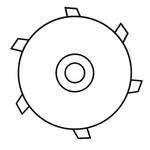
40 cm cutting width through dual-disc system
3 to 10 cm cutting height
edge distance under 3 cm according to the manufacturer
4G connectivity
noise level under 65 dB
Manufacturer image of the climbing ability of the Dreame A3 AWD Pro.
80% Slope: Impressive, but Don’t Believe Blindly
80% or 38.7 degrees sounds brutally strong – and that’s exactly why this specification is prominently placed in almost every product description. For buyers with sloped properties, this is, of course, a massive trigger.
In practice, however, such values should be reasonably contextualized. The maximum specification from a manufacturer is never automatically what works reliably in wet, uneven, or soft everyday conditions. But: That Dreame relies on AWD here is not just marketing. Early impressions from the community are rather positive in this regard. Users praise that the device has a lot of potential for difficult terrain and that the AWD platform apparently tears up the lawn less when turning than some other heavy all-wheel mowers.
That is important. Because raw climbing performance alone is of little use if the robot leaves ugly spots when turning. Here, the A3 AWD Pro appears surprisingly controlled in the first reports.
No RTK, No Wire: One of the Most Exciting Points of the Entire Series
Many new robotic mowers advertise as “wireless,” but in the end, they still mean some form of additional infrastructure. The big appeal of the A3 AWD Pro is that it is supposed to work without boundary wires and without an RTK station.
This has clear advantages in everyday life:
no wire installation in the garden
less effort when changing the layout
fewer classic sources of error like cable breaks
better chances in areas with problematic GPS
Those with many trees at the edges or who are reluctant to install additional antennas will therefore automatically look at such LiDAR models. This is also one of the strongest reasons to buy the A3 series.
What Real Early Users Have Seen Positively So Far
Since the model is still new, one must be honest: There are not yet a huge number of long-term reports. But the first real voices are quite interesting.
1. Solid Hardware and Quality Impression
An early Reddit impression of the A3 Pro 3500 describes the device as well-built. This sounds trivial, but it is not unimportant for robotic mowers. Especially with large, expensive models, one expects a robust platform, and that seems to be what the A3 AWD Pro delivers at first glance.
2. Mapping and Options in the App Look Promising
Another positive point from early user opinions: The mapping is described as decent and the app as quite extensive. This does not automatically mean that everything is perfect, but it suggests that Dreame is not starting with a half-baked minimal app.
3. AWD is Not Just for Slopes, but Also for Turning
An interesting point from early community opinions is that turning appears to be comparatively lawn-friendly. This is more relevant for many buyers than pure maximum slope. A robot that can handle any slope but damages the lawn when turning is annoying in the long run. If the first impression is confirmed, this would be a real advantage over other heavy AWD models.
4. Edge-Mow Function Sounds Practical
Edge mowing is one of the areas where theory and practice often diverge significantly with robotic mowers. That users directly mention the Edge-Mow function positively in the A3 AWD Pro is therefore a good sign.
The Realistic Weaknesses and Open Questions
Now for the important part: What still seems uncertain or problematic?
1. Still Too Few Long-Term Data
This is currently the biggest drawback. The A3 AWD Pro is new, and accordingly, there are significantly fewer reliable user reports than with established models. One can already say today that the concept is exciting. However, one cannot yet say with the same certainty how the device will perform after a full season, in continuous rain, with high grass density, or after many weeks of app updates.
2. Price-Performance is Being Critically Observed
In the community, the question arises as to whether the A3 AWD Pro is price-attractive enough compared to Mammotion, Segway, or other LiDAR models. This does not mean that the device is too expensive. However, it shows that many buyers will compare very closely. The A3 must therefore not only be “good” but also really convince for its price.
3. Potential Problem with Grass Under the Floating Mowing Deck
A particularly interesting criticism from an early review: There are concerns that wet or dense grass could accumulate and compact under the floating mowing deck. This is not yet a widely confirmed series defect, but it is exactly the kind of practical observation that should be taken seriously. Such issues often weigh more heavily in everyday life than large marketing features.
4. Software Needs to Prove Itself
Even though the first impressions of the app are quite decent, the same question always remains with a new model: How stable is the firmware really in actual use? In the end, with robotic mowers, not only the hardware matters, but especially the logic behind it – that is, route planning, resumption, obstacle behavior, charging cycles, and behavior in edge cases.
3500 or 5000 – Which Model Makes More Sense?
Many buyers reflexively reach for the larger model because they want “more reserve.” This is not always sensible.
Dreame A3 AWD Pro 3500 is Usually the Better Choice If …
the actual lawn area is clearly under 3,500 m²
you do not want to pay an unnecessary premium
your garden is large but not extremely complex
you need more normal daily cycles rather than maximum continuous performance
Dreame A3 AWD Pro 5000 is More Worth It If …
you are mowing really large areas
multiple zones need to be serviced regularly
you want fewer charging breaks
your property is large enough to realistically utilize the stronger battery
For many private gardens, the 3500 model will be the more sensible sweet spot. The 5000 model makes sense primarily when the area and mowing frequency truly justify it.
How Good is the Device for Gardens with Trees, Shade, and Difficult Structure?
This is where the A3 AWD Pro becomes particularly exciting. Dreame consciously relies heavily on LiDAR and AI vision instead of classic RTK logic. This is supposed to allow the device to work stably even where GPS-based systems reach their limits: under trees, in narrower passages, and in areas with weak signals.
Of course, this does not mean that every convoluted problem garden will be mowed perfectly. But for those deliberately looking for a model that is not dependent on an RTK antenna, this is one of the most interesting candidates on the market.
Edge Mowing and Borders: One of the Most Important Everyday Topics
Many robotic mowers look good in the open middle part and then disappoint exactly where you look the most: at the edges. Dreame promises with EdgeMaster 2.0 a distance of under 3 cm to the edge. This looks strong on paper, but must always be considered in conjunction with the real garden in everyday life.
At walls, slightly raised edges, uneven boundaries, or loosely set stones, not only the distance is crucial, but also how consistently the robot maintains this edge. The first impressions seem positive, but this will be a point that needs to be evaluated more critically after the first months.
For Which Gardens Does the Dreame A3 AWD Pro Really Fit Well?
large to very large properties
gardens with hills or problematic slopes
users who do not want a boundary wire
properties with trees or areas where RTK could potentially be annoying
buyers who find modern navigation more important than classic wire systems
For Whom I Would Be More Cautious
buyers who want to order immediately just because of the hype
people who have zero tolerance for possible early firmware improvements
users with smaller areas for whom the device is simply overpowered
buyers who primarily rely on proven long-term experience
Conclusion: Very Exciting, but Not Yet a “Blind Buy” Model
The Dreame A3 AWD Pro 3500 and 5000 are already among the most interesting new robotic mowers in the premium class. This is mainly due to the combination of true AWD, LiDAR navigation without RTK, large cutting width, and a concept that clearly targets difficult and larger gardens.
The first real impressions are better than one might expect from such a fresh model. Hardware, mapping, edge-mow, and behavior when turning seem promising. At the same time, it would be irresponsible to act as if the device is completely evaluated already. There are still not enough real long-term experiences from a full season.
Those who want to buy today will likely get one of the most exciting new models on the market with the A3 AWD Pro. Those who want to be as safe as possible should closely observe how software, mowing deck, and everyday usability perform in real gardens over the next weeks and months.
In summary, the Dreame A3 AWD Pro 3500 seems to be the most sensible entry into the series for many large private gardens. The A3 AWD Pro 5000 is the more logical choice for very large areas or for buyers who really need the longer endurance. The concept is right – now Dreame just needs to prove that it remains as strong in everyday life as it does on the data sheet.






Dreame A3 AWD Pro 3500 and 5000 in Test: Real First Impressions, Differences, Problems, and Which Model is Worth It for Whom
Dreame A3 AWD Pro 3500 and 5000 in Test: Real First Impressions, Differences, Problems, and Which Model is Worth It
With the Dreame A3 AWD Pro 3500 and the A3 AWD Pro 5000, Dreame aims to attract buyers who have had enough of two things in robotic lawn mowers: boundary wires and unstable navigation. On paper, the series sounds extremely strong. No RTK, no wire, 360° 3D LiDAR, AI cameras, true all-wheel drive, large cutting width, and a performance that clearly targets larger properties.
But it’s not just the data sheet that is exciting. The more important question is: How realistic is it in a real garden? For this reason, it is worth taking a look at early user opinions, Reddit discussions, and first hands-on tests. And here, a picture emerges that is quite promising – but cannot yet be fully assessed as mature, as the model is still very fresh on the market.
What is the Difference Between the Dreame A3 AWD Pro 3500 and 5000?
The most important question before purchasing is surprisingly simple: Which model do you actually need?
The technical basis is practically identical for both variants. Both rely on the same navigation concept, the same AWD platform, the same 40 cm dual cutting disc, the same cutting height adjustment, and the same app logic. The decisive difference lies mainly in the intended area performance and battery size.
In practice, this means: If you have a larger garden, create many zones, or want as few charging breaks as possible, the 5000 model is more suitable. If you have a large property but not 5,000 m² of lawn area and do not want to pay unnecessarily more, the 3500 model is usually the more sensible choice.
The Technology Sounds Strong – and This Time Not Just in Marketing
What sets the A3 AWD Pro apart from many other robotic lawn mowers is the combination of LiDAR, AI vision, and all-wheel drive. Dreame is consciously taking a different approach than classic RTK systems. Instead of relying on a reference station and clean satellite reception, the device is supposed to directly recognize its environment and navigate stably from that.
This is a real advantage, especially for gardens with trees, changing light conditions, border planting, or difficult signals. This is also the main reason why many users find the LiDAR class interesting at all.
The Most Important Official Key Data
80% Slope: Impressive, but Don’t Believe Blindly
80% or 38.7 degrees sounds brutally strong – and that’s exactly why this specification is prominently placed in almost every product description. For buyers with sloped properties, this is, of course, a massive trigger.
In practice, however, such values should be reasonably contextualized. The maximum specification from a manufacturer is never automatically what works reliably in wet, uneven, or soft everyday conditions. But: That Dreame relies on AWD here is not just marketing. Early impressions from the community are rather positive in this regard. Users praise that the device has a lot of potential for difficult terrain and that the AWD platform apparently tears up the lawn less when turning than some other heavy all-wheel mowers.
That is important. Because raw climbing performance alone is of little use if the robot leaves ugly spots when turning. Here, the A3 AWD Pro appears surprisingly controlled in the first reports.
No RTK, No Wire: One of the Most Exciting Points of the Entire Series
Many new robotic mowers advertise as “wireless,” but in the end, they still mean some form of additional infrastructure. The big appeal of the A3 AWD Pro is that it is supposed to work without boundary wires and without an RTK station.
This has clear advantages in everyday life:
Those with many trees at the edges or who are reluctant to install additional antennas will therefore automatically look at such LiDAR models. This is also one of the strongest reasons to buy the A3 series.
What Real Early Users Have Seen Positively So Far
Since the model is still new, one must be honest: There are not yet a huge number of long-term reports. But the first real voices are quite interesting.
1. Solid Hardware and Quality Impression
An early Reddit impression of the A3 Pro 3500 describes the device as well-built. This sounds trivial, but it is not unimportant for robotic mowers. Especially with large, expensive models, one expects a robust platform, and that seems to be what the A3 AWD Pro delivers at first glance.
2. Mapping and Options in the App Look Promising
Another positive point from early user opinions: The mapping is described as decent and the app as quite extensive. This does not automatically mean that everything is perfect, but it suggests that Dreame is not starting with a half-baked minimal app.
3. AWD is Not Just for Slopes, but Also for Turning
An interesting point from early community opinions is that turning appears to be comparatively lawn-friendly. This is more relevant for many buyers than pure maximum slope. A robot that can handle any slope but damages the lawn when turning is annoying in the long run. If the first impression is confirmed, this would be a real advantage over other heavy AWD models.
4. Edge-Mow Function Sounds Practical
Edge mowing is one of the areas where theory and practice often diverge significantly with robotic mowers. That users directly mention the Edge-Mow function positively in the A3 AWD Pro is therefore a good sign.
The Realistic Weaknesses and Open Questions
Now for the important part: What still seems uncertain or problematic?
1. Still Too Few Long-Term Data
This is currently the biggest drawback. The A3 AWD Pro is new, and accordingly, there are significantly fewer reliable user reports than with established models. One can already say today that the concept is exciting. However, one cannot yet say with the same certainty how the device will perform after a full season, in continuous rain, with high grass density, or after many weeks of app updates.
2. Price-Performance is Being Critically Observed
In the community, the question arises as to whether the A3 AWD Pro is price-attractive enough compared to Mammotion, Segway, or other LiDAR models. This does not mean that the device is too expensive. However, it shows that many buyers will compare very closely. The A3 must therefore not only be “good” but also really convince for its price.
3. Potential Problem with Grass Under the Floating Mowing Deck
A particularly interesting criticism from an early review: There are concerns that wet or dense grass could accumulate and compact under the floating mowing deck. This is not yet a widely confirmed series defect, but it is exactly the kind of practical observation that should be taken seriously. Such issues often weigh more heavily in everyday life than large marketing features.
4. Software Needs to Prove Itself
Even though the first impressions of the app are quite decent, the same question always remains with a new model: How stable is the firmware really in actual use? In the end, with robotic mowers, not only the hardware matters, but especially the logic behind it – that is, route planning, resumption, obstacle behavior, charging cycles, and behavior in edge cases.
3500 or 5000 – Which Model Makes More Sense?
Many buyers reflexively reach for the larger model because they want “more reserve.” This is not always sensible.
Dreame A3 AWD Pro 3500 is Usually the Better Choice If …
Dreame A3 AWD Pro 5000 is More Worth It If …
For many private gardens, the 3500 model will be the more sensible sweet spot. The 5000 model makes sense primarily when the area and mowing frequency truly justify it.
How Good is the Device for Gardens with Trees, Shade, and Difficult Structure?
This is where the A3 AWD Pro becomes particularly exciting. Dreame consciously relies heavily on LiDAR and AI vision instead of classic RTK logic. This is supposed to allow the device to work stably even where GPS-based systems reach their limits: under trees, in narrower passages, and in areas with weak signals.
Of course, this does not mean that every convoluted problem garden will be mowed perfectly. But for those deliberately looking for a model that is not dependent on an RTK antenna, this is one of the most interesting candidates on the market.
Edge Mowing and Borders: One of the Most Important Everyday Topics
Many robotic mowers look good in the open middle part and then disappoint exactly where you look the most: at the edges. Dreame promises with EdgeMaster 2.0 a distance of under 3 cm to the edge. This looks strong on paper, but must always be considered in conjunction with the real garden in everyday life.
At walls, slightly raised edges, uneven boundaries, or loosely set stones, not only the distance is crucial, but also how consistently the robot maintains this edge. The first impressions seem positive, but this will be a point that needs to be evaluated more critically after the first months.
For Which Gardens Does the Dreame A3 AWD Pro Really Fit Well?
For Whom I Would Be More Cautious
Conclusion: Very Exciting, but Not Yet a “Blind Buy” Model
The Dreame A3 AWD Pro 3500 and 5000 are already among the most interesting new robotic mowers in the premium class. This is mainly due to the combination of true AWD, LiDAR navigation without RTK, large cutting width, and a concept that clearly targets difficult and larger gardens.
The first real impressions are better than one might expect from such a fresh model. Hardware, mapping, edge-mow, and behavior when turning seem promising. At the same time, it would be irresponsible to act as if the device is completely evaluated already. There are still not enough real long-term experiences from a full season.
Those who want to buy today will likely get one of the most exciting new models on the market with the A3 AWD Pro. Those who want to be as safe as possible should closely observe how software, mowing deck, and everyday usability perform in real gardens over the next weeks and months.
In summary, the Dreame A3 AWD Pro 3500 seems to be the most sensible entry into the series for many large private gardens. The A3 AWD Pro 5000 is the more logical choice for very large areas or for buyers who really need the longer endurance. The concept is right – now Dreame just needs to prove that it remains as strong in everyday life as it does on the data sheet.