Der ANTHBOT Genie 600 is one of the more affordable robotic mowers without boundary wires, currently receiving a lot of attention. On paper, the model sounds interesting: RTK navigation, multiple cameras, automatic mapping, app control, and a price that is significantly lower than many premium models.
That’s exactly why the Genie 600 is exciting for many buyers who do not want to lay a wire in the garden but also do not want to spend 2000 or 3000 euros on a robotic mower.
The more important question is: How well does the Genie 600 really perform in everyday life? For this article, we looked at official ANTHBOT data, early reviews, and real user opinions from Reddit and community groups. The overall result is positive – but with clear limitations.
ANTHBOT Genie 600 in edge mowing.
Important point before purchase: There are conflicting area specifications
Before we get to the strengths and weaknesses, one point needs to be clearly addressed: The area communication surrounding the Genie 600 is not entirely consistent.
In the official buying guide from ANTHBOT, the Genie 600 is classified as a model for lawn areas under 600 m². However, on the official Genie series page, the Genie 600 is listed with 900 m².
For buyers, this means practically: Those with an area around 300 to 500 m² are clearly in the safe target group. Those approaching 700 to 900 m² should plan much more cautiously and focus more on actual mowing time, charging cycles, and garden complexity rather than just the marketing number.
Technical specifications of the ANTHBOT Genie 600
wireless robotic mower without boundary wire
RTK + 3D vision with 4 cameras
20 multi-zones
2,500 mAh battery
maximum slope of up to 45% or 24°
cutting height 30 to 70 mm via app
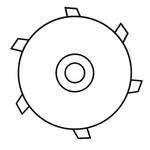
5-blade cutting disc
noise level of about 58 dB
IPX6 water protection
WLAN 2.4 GHz and Bluetooth
On paper, this is quite attractive for this price range. Especially the combination of RTK and four cameras is interesting because it is not only intended for navigation in open areas but also aims to help where the signal becomes weaker.
What makes the Genie 600 attractive in everyday life
1. Easy entry into the world of wireless robotic mowers
Several early user reports describe the Genie 600 as pleasantly uncomplicated to start with. This is a real advantage for people buying their first robotic mower who do not want to lay boundary wires first.
In initial impressions on Reddit, the setup process is described as surprisingly easy. The mapping has also been perceived as pleasantly straightforward multiple times. This is an important point because many wireless models seem easy on paper but can quickly become annoying during setup in practice.
2. Clean mapping and good orientation in the garden
For a robotic mower in this class, mapping is rated rather positively in early user experiences. Users report that the robot captures the garden cleanly and works precisely around trees or individual objects.
This is particularly relevant for smaller to medium-sized private gardens. If a mower in this class fails at simple contours, it is quickly out of the running. The Genie 600 currently does not leave that impression.
3. Solid obstacle detection for typical everyday situations
ANTHBOT promotes the Genie series with AI detection for over 1000 objects. Such numbers should always be read with caution. Nevertheless, the basic idea is sensible: The mower combines RTK with cameras to not only avoid obstacles but also to recognize boundaries and corners more cleanly.
For normal gardens with trees, furniture, toys, or flowerbed edges, this is a real plus compared to very simple systems.
of up to 45 percent or 24 degrees.
Slopes and difficult terrain: good, but don’t see it as a miracle device
ANTHBOT states a maximum slope of 45% for the Genie 600. This is a decent value for a robot in this class. Real user opinions confirm that light to moderate slopes generally work well. One user even reports that the robot handles a slight incline of about 30% without spinning wheels.
At the same time, there are also indications that traction and edge performance are not perfect in every situation. In the official ANTHBOT community, the manufacturer itself pointed out the need for improvement in traction, edge performance, and blade behavior.
This is important for classification: The Genie 600 is not a slope monster for extreme problem properties. It is interesting for normal, slightly sloped gardens. For very difficult terrain, one should remain realistic.
The biggest advantages from real early user opinions
Price-performance ratio currently seems attractive
A recurring point in early opinions is the price-performance ratio. Especially users who do not need a high-end mower see the Genie 600 as an interesting option for smaller gardens.
Quiet operation
Several users describe the mower as pleasantly quiet. This also matches the official specification of around 58 dB. For densely populated residential areas or small properties, this is a real advantage.
Often well-dimensioned for 400 to 500 m²
In early reports, it repeatedly appears that the Genie 600 fits well for areas around 400 m². It seems that the model is currently most consistent there: not too small, but also not too ambitious.
The real weaknesses: What users actually criticize
1. The battery is the biggest practical compromise
The most common criticism concerns the battery size. The Genie 600 operates with only 2,500 mAh. In everyday life, this means more frequent charging breaks. This is clearly mentioned as the biggest disadvantage in several user reports.
For small gardens, this is not dramatic. However, for areas in the upper range of the manufacturer’s specifications, it can quickly become annoying. Therefore, it is advisable: Those who want larger areas or as few charging cycles as possible should look more towards the Genie 1000.
2. Wi-Fi can be annoying in everyday life
A particularly specific criticism from practice is the Wi-Fi. A user with a full season of experience clearly states that the Wi-Fi of his Genie 600 was weak and he could only solve the problem with several repeaters.
This is not a detail to be ignored. Especially with smart robotic mowers, an unstable connection is annoying because many functions run through the app. Those who already have weak Wi-Fi areas on the property should plan for this before purchase.
3. Edge performance is not always perfect
As with many robotic mowers, the edge mowing of the Genie 600 is not ideal in every situation. This was even indirectly confirmed in a response from the official community, where improvements in traction, edge performance, and blade behavior were mentioned.
This does not mean that the robot is bad at the edge. It just means: Those expecting perfect edges without rework should lower their expectations a bit.
4. Long-term experience is still thinner than with established brands
Another honest point: The Genie 600 is not yet a model for which there is already a huge number of long-term community experiences. There are early positive impressions and first season reports, but the data basis is still clearly thinner than with big names like Husqvarna, Segway, or Gardena.
For buyers, this means mainly one thing: The existing voices seem encouraging, but the Genie 600 is still more of a model that one should buy with some openness to early product maturity.
How good is the cutting quality?
The cutting quality is generally described as decent in early reports. One user even wrote that no patches were missed. This is a good sign, especially for smaller gardens.
Nevertheless, the result – as with any robotic mower – strongly depends on three things:
how often it is mowed
how dense and wet the grass is
how good the blades still are
The Genie 600 works with a 5-blade disc and app-controlled cutting height. If the blades are dull, the cutting quality suffers quickly. Many supposed mowing problems are ultimately more of a blade issue than a navigation problem.
Navigation in shaded areas: one of the more interesting points
ANTHBOT particularly emphasizes the combination of full-band RTK and four AI cameras with the Genie. According to the manufacturer, this should ensure more stable navigation, especially in shaded areas and under difficult conditions. In practice, this is one of the more interesting points of the model.
Early reviews describe that the navigation also appears solid in more complex gardens with trees. This is not yet definitive proof for every garden situation, but at least a positive signal.
The Genie 600 is protected according to IPX6 and is washable, according to the manufacturer.
Rain, cleaning, and everyday suitability
A practical plus point is the IPX6 classification. According to the manufacturer, the mower can also be cleaned with water. This is not a huge selling point, but it is still pleasant in everyday life because grass clippings and dirt can quickly accumulate on robotic mowers.
Also, regarding noise, the Genie 600 performs decently on paper and in early impressions. Those who want to run the mower more in the morning, during the day, or in the early evening do not get a particularly noticeable noise device here.
Who the ANTHBOT Genie 600 is good for
for smaller to medium gardens
particularly interesting for areas roughly in the range of 300 to 500 m²
for buyers who do not want a boundary wire
for users looking for a more affordable entry model into the wireless class
for gardens with a slight slope and normal structure
Who I would be more cautious about
for areas significantly closer to 900 m² than to 600 m²
if as few charging breaks as possible are important
for weak Wi-Fi around the property
if perfect edges without rework are expected
if only a fully matured long-term model is acceptable
Conclusion: an interesting budget robotic mower with real strengths but clear limits
The ANTHBOT Genie 600 currently appears to be one of the more interesting affordable robotic mowers without boundary wires. The combination of easy setup, clean mapping, quiet operation, and generally decent navigation makes the model particularly attractive for smaller private gardens.
At the same time, one should not downplay the limits. The small battery is the biggest compromise, the Wi-Fi can be annoying depending on the property, and there is still room for improvement in edge and traction performance.
Those with a very large or difficult garden should not buy the Genie 600 blindly based on the marketing number. However, for those with a more normal garden in the smaller to medium range looking for an affordable entry into wireless robotic mowing, this model is significantly more interesting than the relatively unknown name might suggest based on previous user feedback.










ANTHBOT Genie 600 Test: real experiences, practical problems, and whether the robotic lawnmower without boundary wire is worth it
Der ANTHBOT Genie 600 is one of the more affordable robotic mowers without boundary wires, currently receiving a lot of attention. On paper, the model sounds interesting: RTK navigation, multiple cameras, automatic mapping, app control, and a price that is significantly lower than many premium models.
That’s exactly why the Genie 600 is exciting for many buyers who do not want to lay a wire in the garden but also do not want to spend 2000 or 3000 euros on a robotic mower.
The more important question is: How well does the Genie 600 really perform in everyday life? For this article, we looked at official ANTHBOT data, early reviews, and real user opinions from Reddit and community groups. The overall result is positive – but with clear limitations.
Important point before purchase: There are conflicting area specifications
Before we get to the strengths and weaknesses, one point needs to be clearly addressed: The area communication surrounding the Genie 600 is not entirely consistent.
In the official buying guide from ANTHBOT, the Genie 600 is classified as a model for lawn areas under 600 m². However, on the official Genie series page, the Genie 600 is listed with 900 m².
For buyers, this means practically: Those with an area around 300 to 500 m² are clearly in the safe target group. Those approaching 700 to 900 m² should plan much more cautiously and focus more on actual mowing time, charging cycles, and garden complexity rather than just the marketing number.
Technical specifications of the ANTHBOT Genie 600
On paper, this is quite attractive for this price range. Especially the combination of RTK and four cameras is interesting because it is not only intended for navigation in open areas but also aims to help where the signal becomes weaker.
What makes the Genie 600 attractive in everyday life
1. Easy entry into the world of wireless robotic mowers
Several early user reports describe the Genie 600 as pleasantly uncomplicated to start with. This is a real advantage for people buying their first robotic mower who do not want to lay boundary wires first.
In initial impressions on Reddit, the setup process is described as surprisingly easy. The mapping has also been perceived as pleasantly straightforward multiple times. This is an important point because many wireless models seem easy on paper but can quickly become annoying during setup in practice.
2. Clean mapping and good orientation in the garden
For a robotic mower in this class, mapping is rated rather positively in early user experiences. Users report that the robot captures the garden cleanly and works precisely around trees or individual objects.
This is particularly relevant for smaller to medium-sized private gardens. If a mower in this class fails at simple contours, it is quickly out of the running. The Genie 600 currently does not leave that impression.
3. Solid obstacle detection for typical everyday situations
ANTHBOT promotes the Genie series with AI detection for over 1000 objects. Such numbers should always be read with caution. Nevertheless, the basic idea is sensible: The mower combines RTK with cameras to not only avoid obstacles but also to recognize boundaries and corners more cleanly.
For normal gardens with trees, furniture, toys, or flowerbed edges, this is a real plus compared to very simple systems.
Slopes and difficult terrain: good, but don’t see it as a miracle device
ANTHBOT states a maximum slope of 45% for the Genie 600. This is a decent value for a robot in this class. Real user opinions confirm that light to moderate slopes generally work well. One user even reports that the robot handles a slight incline of about 30% without spinning wheels.
At the same time, there are also indications that traction and edge performance are not perfect in every situation. In the official ANTHBOT community, the manufacturer itself pointed out the need for improvement in traction, edge performance, and blade behavior.
This is important for classification: The Genie 600 is not a slope monster for extreme problem properties. It is interesting for normal, slightly sloped gardens. For very difficult terrain, one should remain realistic.
The biggest advantages from real early user opinions
Price-performance ratio currently seems attractive
A recurring point in early opinions is the price-performance ratio. Especially users who do not need a high-end mower see the Genie 600 as an interesting option for smaller gardens.
Quiet operation
Several users describe the mower as pleasantly quiet. This also matches the official specification of around 58 dB. For densely populated residential areas or small properties, this is a real advantage.
Often well-dimensioned for 400 to 500 m²
In early reports, it repeatedly appears that the Genie 600 fits well for areas around 400 m². It seems that the model is currently most consistent there: not too small, but also not too ambitious.
The real weaknesses: What users actually criticize
1. The battery is the biggest practical compromise
The most common criticism concerns the battery size. The Genie 600 operates with only 2,500 mAh. In everyday life, this means more frequent charging breaks. This is clearly mentioned as the biggest disadvantage in several user reports.
For small gardens, this is not dramatic. However, for areas in the upper range of the manufacturer’s specifications, it can quickly become annoying. Therefore, it is advisable: Those who want larger areas or as few charging cycles as possible should look more towards the Genie 1000.
2. Wi-Fi can be annoying in everyday life
A particularly specific criticism from practice is the Wi-Fi. A user with a full season of experience clearly states that the Wi-Fi of his Genie 600 was weak and he could only solve the problem with several repeaters.
This is not a detail to be ignored. Especially with smart robotic mowers, an unstable connection is annoying because many functions run through the app. Those who already have weak Wi-Fi areas on the property should plan for this before purchase.
3. Edge performance is not always perfect
As with many robotic mowers, the edge mowing of the Genie 600 is not ideal in every situation. This was even indirectly confirmed in a response from the official community, where improvements in traction, edge performance, and blade behavior were mentioned.
This does not mean that the robot is bad at the edge. It just means: Those expecting perfect edges without rework should lower their expectations a bit.
4. Long-term experience is still thinner than with established brands
Another honest point: The Genie 600 is not yet a model for which there is already a huge number of long-term community experiences. There are early positive impressions and first season reports, but the data basis is still clearly thinner than with big names like Husqvarna, Segway, or Gardena.
For buyers, this means mainly one thing: The existing voices seem encouraging, but the Genie 600 is still more of a model that one should buy with some openness to early product maturity.
How good is the cutting quality?
The cutting quality is generally described as decent in early reports. One user even wrote that no patches were missed. This is a good sign, especially for smaller gardens.
Nevertheless, the result – as with any robotic mower – strongly depends on three things:
The Genie 600 works with a 5-blade disc and app-controlled cutting height. If the blades are dull, the cutting quality suffers quickly. Many supposed mowing problems are ultimately more of a blade issue than a navigation problem.
Navigation in shaded areas: one of the more interesting points
ANTHBOT particularly emphasizes the combination of full-band RTK and four AI cameras with the Genie. According to the manufacturer, this should ensure more stable navigation, especially in shaded areas and under difficult conditions. In practice, this is one of the more interesting points of the model.
Early reviews describe that the navigation also appears solid in more complex gardens with trees. This is not yet definitive proof for every garden situation, but at least a positive signal.
Rain, cleaning, and everyday suitability
A practical plus point is the IPX6 classification. According to the manufacturer, the mower can also be cleaned with water. This is not a huge selling point, but it is still pleasant in everyday life because grass clippings and dirt can quickly accumulate on robotic mowers.
Also, regarding noise, the Genie 600 performs decently on paper and in early impressions. Those who want to run the mower more in the morning, during the day, or in the early evening do not get a particularly noticeable noise device here.
Who the ANTHBOT Genie 600 is good for
Who I would be more cautious about
Conclusion: an interesting budget robotic mower with real strengths but clear limits
The ANTHBOT Genie 600 currently appears to be one of the more interesting affordable robotic mowers without boundary wires. The combination of easy setup, clean mapping, quiet operation, and generally decent navigation makes the model particularly attractive for smaller private gardens.
At the same time, one should not downplay the limits. The small battery is the biggest compromise, the Wi-Fi can be annoying depending on the property, and there is still room for improvement in edge and traction performance.
Those with a very large or difficult garden should not buy the Genie 600 blindly based on the marketing number. However, for those with a more normal garden in the smaller to medium range looking for an affordable entry into wireless robotic mowing, this model is significantly more interesting than the relatively unknown name might suggest based on previous user feedback.