Gardena Mähroboter SILENO minimo 250 m² in Test – real experiences, problems, strengths and weaknesses
The Gardena SILENO minimo 250 m² is one of the most well-known robotic mowers for very small gardens. This is also its greatest strength: it does not aim to be a high-end robot for large properties, but rather a compact model for simple to moderately complex areas, where the main desire is to have regularly mowed grass without much effort.
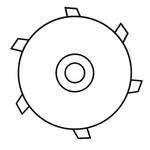
On paper, the concept seems logical. The SILENO minimo 250 is designed for lawn areas of up to about 250 m², works with a classic boundary wire, uses three small blades in a rotating cutting system, offers Bluetooth control via an app, and is supposed to handle narrow passages and small, winding areas. For many buyers, this is exactly what is attractive: no overloaded technical monster, but a comparatively simple robotic mower for everyday use.
In practice, the picture is mixed, as is often the case. There are users who are satisfied with the device and praise the simple basic idea, the quiet operation, and its good suitability for small gardens. At the same time, several problems keep appearing in real reviews and discussions: issues with the boundary wire or connections at the charging station, difficulties with docking, charging problems, limited app range due to Bluetooth, and the typical weakness that the robot reaches its limits faster in more complicated gardens than some buyers expect.
That is exactly why an honest review is worthwhile. This article is not about sugarcoating the device, but realistically showing where the Gardena SILENO minimo 250 works well, where it can be annoying, and for whom it is actually a sensible choice.
Technical specifications of the Gardena SILENO minimo 250 m²
Feature
Gardena SILENO minimo 250 m²
Recommended lawn area
up to approx. 250 m²
Navigation
Boundary wire / CorridorCut
Cutting width
16 cm
Cutting height
20–45 mm
Maximum slope
up to 25 %
App control
Gardena Bluetooth App
Noise level
approx. 57 dB
Special feature
very compact, designed for small gardens
What makes the SILENO minimo 250 interesting
The most important point is its clear target audience. Many robotic mowers today either seem technically overloaded or unnecessarily expensive for small properties. The Gardena SILENO minimo 250 is exactly the opposite. It is clearly positioned for small areas and is supposed to excel where a huge mower with GPS, RTK, LiDAR, or camera systems would actually be overkill.
For small home gardens, this can be an advantage. A compact robotic mower with a classic boundary wire is still easier to understand in many situations than a modern vision or RTK system. Especially users who have no interest in dealing intensively with mapping, signal quality, or firmware tuning often see this as a positive.
Additionally, Gardena as a brand in the gardening sector is well-known to many buyers. This creates trust. You are not buying an exotic newcomer here, but a device from a product family that seems accessible and understandable to many ordinary households.
How does the robot perform in everyday life?
In everyday life, the character of the SILENO minimo 250 becomes very clear: it is a classic, rather simple robotic mower for small gardens that are reasonably well-prepared. If the garden has a clean boundary, the wire is properly laid, there are no extreme slopes, and the area is not too complex, the device can do exactly what many people expect: regularly cut small amounts of grass and thus keep the lawn at a consistently decent level.
Especially in simple front gardens, row house gardens, or small back areas, the concept seems very logical. The small cutting width of 16 cm is a disadvantage for large gardens, but often perfectly fine for small areas. The question is rather how well the robot copes with the real structure of the garden – and that is where the differences between positive and negative experiences begin.
The biggest advantages according to real users
1. Good basic idea for small gardens
Many users see the actual strength of the device in this. The minimo does not want to be an all-rounder. For small areas, this is often even better than an oversized robotic mower.
2. Relatively quiet operation
With around 57 dB, the robot is perceived as pleasantly quiet. Especially in densely populated residential areas, this is a real plus.
3. Simple basic operation
It is often positively noted that the robot remains understandable at its core. Those who do not want a complex high-tech mower find a classic, comprehensible solution in this device.
4. CorridorCut is fundamentally sensible for small gardens
The ability to master narrower passages is important for small properties. This is clearly highlighted by Gardena and is at least conceptually a real advantage for this class.
The most common problems from real user experiences
Now comes the part that is important for a real purchasing decision. Because some problems repeatedly appear in reviews and community reports.
1. Problems with the boundary wire or connections
The most typical real problem with this model is not the robot itself, but the cable system. Users repeatedly report that faults in the boundary wire or connections to the charging station were the cause of disturbances. An example from Reddit clearly shows that a problem with “no loop but no breakpoints” ultimately stemmed from a poor connection between the boundary wire and the charging station.
This is important because it shows: many supposed robot errors are actually installation or contact problems. Especially with wired devices, this is a classic weak point.
2. Difficulties in finding or leaving the charging station
Another issue that arises from user reports is the charging station. Discussions mention that the robot sometimes does not reliably reach the station or does not start as planned in the morning and simply “waits” at the base. The problem is not exclusive to the minimo, but it fits the same platform logic: if the cable system, the station, or the start process do not work together smoothly, everyday life quickly becomes frustrating.
Especially in small gardens, this is annoying because one would actually expect maximum reliability here.
3. Bluetooth app is limited in everyday use
The SILENO minimo 250 does not use a full remote connection like many modern Wi-Fi or 4G robots, but relies on Bluetooth. This is sufficient for some buyers, but a real disadvantage for others. In real reviews, it is criticized that one must stand very close to the device for the connection, making the app feel limited in everyday use.
This is not a software detail, but something that directly affects daily use. Those who like to control everything remotely will be less happy with the minimo than with smart high-end models.
4. Charging problems and unreliable behavior
In some real reviews, it is described that the robot stands at the charging station but does not charge properly or later reports that it needs to be charged again. Such experiences are of course not automatically the same for every device, but they are part of the real user world of this model.
When a robotic mower appears unreliable in its basic functions – starting, charging, working automatically – it is particularly frustrating for buyers.
5. Not ideal for more complicated or demanding gardens
A user comment from Reddit sums it up quite well: the minimo is “basic.” This is not necessarily an insult, but an accurate classification. Those with a more complex garden, expecting greater performance, or working with tight boundaries, difficult slopes, and high demands for perfection will notice the limits of this model more quickly.
Especially the small cutting width and the overall simpler platform level become noticeable. The minimo is indeed built more for small and relatively manageable gardens – and not for difficult properties where one expects high-end logic.
How significant is the role of installation?
With hardly any robotic mower is the installation as important as with a small, wired model. This is where many users make the biggest experience in everyday life: when the cable is laid cleanly, the station is well positioned, and the garden is well prepared, the device often performs significantly better. Conversely, if there are issues with distances, transitions, or connections, the problems that are later described as “the robot is useless” arise.
This does not mean that every criticism of the device is unfair. It just means: with the SILENO minimo 250, the installation matters a lot. This should be known before purchase.
For which gardens is the Gardena SILENO minimo 250 sensible?
The robot seems particularly sensible for:
small, simple home gardens
clear areas without extreme slopes
users who have no fundamental problem with boundary wires
people who prefer a quiet, classic device
In this role, the minimo is at its strongest. It is not a future robot with vision and LiDAR, but a small working device for a clearly defined task.
For whom is the minimo rather not a good choice?
The model seems less sensible for buyers who:
expect a full remote control with Wi-Fi or 4G
have a difficult or highly winding garden
do not want to deal with cable installation and its weaknesses
expect maximum reliability without thinking or adjustments
If you know that you would be bothered by charging problems, cable issues, or Bluetooth limitations, then the minimo is probably not the robot that will make you happy.
What can be done if the robot has problems?
The typical solutions from real user problems are often surprisingly down-to-earth:
Thoroughly check cable connections at the station
Inspect the boundary wire for poor contacts or damaged spots
Keep the area in front of the charging station flat and clean
Understand the app only as a local control and not as a full remote system
If behavior is unreliable, critically review the installation as a whole
Especially with this model, it holds true: many problems are not spectacular, but classic. Those who accept this often come to a solution more quickly.
And what about wear parts?
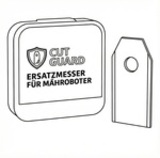
Even a small robotic mower needs maintenance. Blades and cutting systems should be checked regularly, especially when the cutting quality worsens or more grass accumulates under the robot. This also applies to the SILENO minimo 250, even if it seems overall simpler than modern high-end robots.
Conclusion
The Gardena SILENO minimo 250 m² is a classic robotic mower for small gardens – with all the strengths and weaknesses that arise from that. Its strengths lie in the clear target audience, quiet operation, and fundamentally comprehensible concept for small areas. Its weaknesses lie mainly where modern buyers often expect more today: more connectivity, more fault tolerance, less cable dependency, and more robustness in everyday life.
Real user experiences show a fairly clear picture: if the installation is done cleanly and the garden fits the device, the minimo can function well. However, if cables, charging stations, or garden situations are problematic, the small helper quickly becomes a device that demands more attention than one actually wanted.
In summary, the Gardena SILENO minimo 250 is not a bad robotic mower – but it is also not a device for everyone. For small, simple gardens with realistic expectations, it can be sensible. However, those who want modern wireless technology, maximum app flexibility, or significantly more reserve should look in another class.









Gardena Robotic Lawn Mower SILENO minimo 250 m² in Test – real experiences, problems, strengths, and weaknesses
Gardena Mähroboter SILENO minimo 250 m² in Test – real experiences, problems, strengths and weaknesses
The Gardena SILENO minimo 250 m² is one of the most well-known robotic mowers for very small gardens. This is also its greatest strength: it does not aim to be a high-end robot for large properties, but rather a compact model for simple to moderately complex areas, where the main desire is to have regularly mowed grass without much effort.
On paper, the concept seems logical. The SILENO minimo 250 is designed for lawn areas of up to about 250 m², works with a classic boundary wire, uses three small blades in a rotating cutting system, offers Bluetooth control via an app, and is supposed to handle narrow passages and small, winding areas. For many buyers, this is exactly what is attractive: no overloaded technical monster, but a comparatively simple robotic mower for everyday use.
In practice, the picture is mixed, as is often the case. There are users who are satisfied with the device and praise the simple basic idea, the quiet operation, and its good suitability for small gardens. At the same time, several problems keep appearing in real reviews and discussions: issues with the boundary wire or connections at the charging station, difficulties with docking, charging problems, limited app range due to Bluetooth, and the typical weakness that the robot reaches its limits faster in more complicated gardens than some buyers expect.
That is exactly why an honest review is worthwhile. This article is not about sugarcoating the device, but realistically showing where the Gardena SILENO minimo 250 works well, where it can be annoying, and for whom it is actually a sensible choice.
Technical specifications of the Gardena SILENO minimo 250 m²
What makes the SILENO minimo 250 interesting
The most important point is its clear target audience. Many robotic mowers today either seem technically overloaded or unnecessarily expensive for small properties. The Gardena SILENO minimo 250 is exactly the opposite. It is clearly positioned for small areas and is supposed to excel where a huge mower with GPS, RTK, LiDAR, or camera systems would actually be overkill.
For small home gardens, this can be an advantage. A compact robotic mower with a classic boundary wire is still easier to understand in many situations than a modern vision or RTK system. Especially users who have no interest in dealing intensively with mapping, signal quality, or firmware tuning often see this as a positive.
Additionally, Gardena as a brand in the gardening sector is well-known to many buyers. This creates trust. You are not buying an exotic newcomer here, but a device from a product family that seems accessible and understandable to many ordinary households.
How does the robot perform in everyday life?
In everyday life, the character of the SILENO minimo 250 becomes very clear: it is a classic, rather simple robotic mower for small gardens that are reasonably well-prepared. If the garden has a clean boundary, the wire is properly laid, there are no extreme slopes, and the area is not too complex, the device can do exactly what many people expect: regularly cut small amounts of grass and thus keep the lawn at a consistently decent level.
Especially in simple front gardens, row house gardens, or small back areas, the concept seems very logical. The small cutting width of 16 cm is a disadvantage for large gardens, but often perfectly fine for small areas. The question is rather how well the robot copes with the real structure of the garden – and that is where the differences between positive and negative experiences begin.
The biggest advantages according to real users
1. Good basic idea for small gardens
Many users see the actual strength of the device in this. The minimo does not want to be an all-rounder. For small areas, this is often even better than an oversized robotic mower.
2. Relatively quiet operation
With around 57 dB, the robot is perceived as pleasantly quiet. Especially in densely populated residential areas, this is a real plus.
3. Simple basic operation
It is often positively noted that the robot remains understandable at its core. Those who do not want a complex high-tech mower find a classic, comprehensible solution in this device.
4. CorridorCut is fundamentally sensible for small gardens
The ability to master narrower passages is important for small properties. This is clearly highlighted by Gardena and is at least conceptually a real advantage for this class.
The most common problems from real user experiences
Now comes the part that is important for a real purchasing decision. Because some problems repeatedly appear in reviews and community reports.
1. Problems with the boundary wire or connections
The most typical real problem with this model is not the robot itself, but the cable system. Users repeatedly report that faults in the boundary wire or connections to the charging station were the cause of disturbances. An example from Reddit clearly shows that a problem with “no loop but no breakpoints” ultimately stemmed from a poor connection between the boundary wire and the charging station.
This is important because it shows: many supposed robot errors are actually installation or contact problems. Especially with wired devices, this is a classic weak point.
2. Difficulties in finding or leaving the charging station
Another issue that arises from user reports is the charging station. Discussions mention that the robot sometimes does not reliably reach the station or does not start as planned in the morning and simply “waits” at the base. The problem is not exclusive to the minimo, but it fits the same platform logic: if the cable system, the station, or the start process do not work together smoothly, everyday life quickly becomes frustrating.
Especially in small gardens, this is annoying because one would actually expect maximum reliability here.
3. Bluetooth app is limited in everyday use
The SILENO minimo 250 does not use a full remote connection like many modern Wi-Fi or 4G robots, but relies on Bluetooth. This is sufficient for some buyers, but a real disadvantage for others. In real reviews, it is criticized that one must stand very close to the device for the connection, making the app feel limited in everyday use.
This is not a software detail, but something that directly affects daily use. Those who like to control everything remotely will be less happy with the minimo than with smart high-end models.
4. Charging problems and unreliable behavior
In some real reviews, it is described that the robot stands at the charging station but does not charge properly or later reports that it needs to be charged again. Such experiences are of course not automatically the same for every device, but they are part of the real user world of this model.
When a robotic mower appears unreliable in its basic functions – starting, charging, working automatically – it is particularly frustrating for buyers.
5. Not ideal for more complicated or demanding gardens
A user comment from Reddit sums it up quite well: the minimo is “basic.” This is not necessarily an insult, but an accurate classification. Those with a more complex garden, expecting greater performance, or working with tight boundaries, difficult slopes, and high demands for perfection will notice the limits of this model more quickly.
Especially the small cutting width and the overall simpler platform level become noticeable. The minimo is indeed built more for small and relatively manageable gardens – and not for difficult properties where one expects high-end logic.
How significant is the role of installation?
With hardly any robotic mower is the installation as important as with a small, wired model. This is where many users make the biggest experience in everyday life: when the cable is laid cleanly, the station is well positioned, and the garden is well prepared, the device often performs significantly better. Conversely, if there are issues with distances, transitions, or connections, the problems that are later described as “the robot is useless” arise.
This does not mean that every criticism of the device is unfair. It just means: with the SILENO minimo 250, the installation matters a lot. This should be known before purchase.
For which gardens is the Gardena SILENO minimo 250 sensible?
The robot seems particularly sensible for:
In this role, the minimo is at its strongest. It is not a future robot with vision and LiDAR, but a small working device for a clearly defined task.
For whom is the minimo rather not a good choice?
The model seems less sensible for buyers who:
If you know that you would be bothered by charging problems, cable issues, or Bluetooth limitations, then the minimo is probably not the robot that will make you happy.
What can be done if the robot has problems?
The typical solutions from real user problems are often surprisingly down-to-earth:
Especially with this model, it holds true: many problems are not spectacular, but classic. Those who accept this often come to a solution more quickly.
And what about wear parts?
Even a small robotic mower needs maintenance. Blades and cutting systems should be checked regularly, especially when the cutting quality worsens or more grass accumulates under the robot. This also applies to the SILENO minimo 250, even if it seems overall simpler than modern high-end robots.
Conclusion
The Gardena SILENO minimo 250 m² is a classic robotic mower for small gardens – with all the strengths and weaknesses that arise from that. Its strengths lie in the clear target audience, quiet operation, and fundamentally comprehensible concept for small areas. Its weaknesses lie mainly where modern buyers often expect more today: more connectivity, more fault tolerance, less cable dependency, and more robustness in everyday life.
Real user experiences show a fairly clear picture: if the installation is done cleanly and the garden fits the device, the minimo can function well. However, if cables, charging stations, or garden situations are problematic, the small helper quickly becomes a device that demands more attention than one actually wanted.
In summary, the Gardena SILENO minimo 250 is not a bad robotic mower – but it is also not a device for everyone. For small, simple gardens with realistic expectations, it can be sensible. However, those who want modern wireless technology, maximum app flexibility, or significantly more reserve should look in another class.